Table of Contents
Introduction: Why Silica Fume Color Matters
Silica fume (also called microsilica) is an indispensable mineral admixture in modern high-performance concrete. Collected from SiO₂ fumes produced during ferrosilicon or industrial silicon smelting, its average particle size is only 0.1-0.2 microns, with a specific surface area of 15,000-25,000 m²/kg. The micro-filler effect and pozzolanic reaction of these ultrafine particles significantly improve concrete strength, density and durability.
However, in practical engineering, many engineers and purchasers overlook a critical issue: silica fume comes in white and grey varieties. The color difference is not merely cosmetic—it directly affects the aesthetic quality of decorative concrete, the whiteness stability of white UHPC, and the surface finish of GRC products. Choose wrong and you may need additional bleaching, or worse, an entire batch is rejected.
What is White Silica Fume
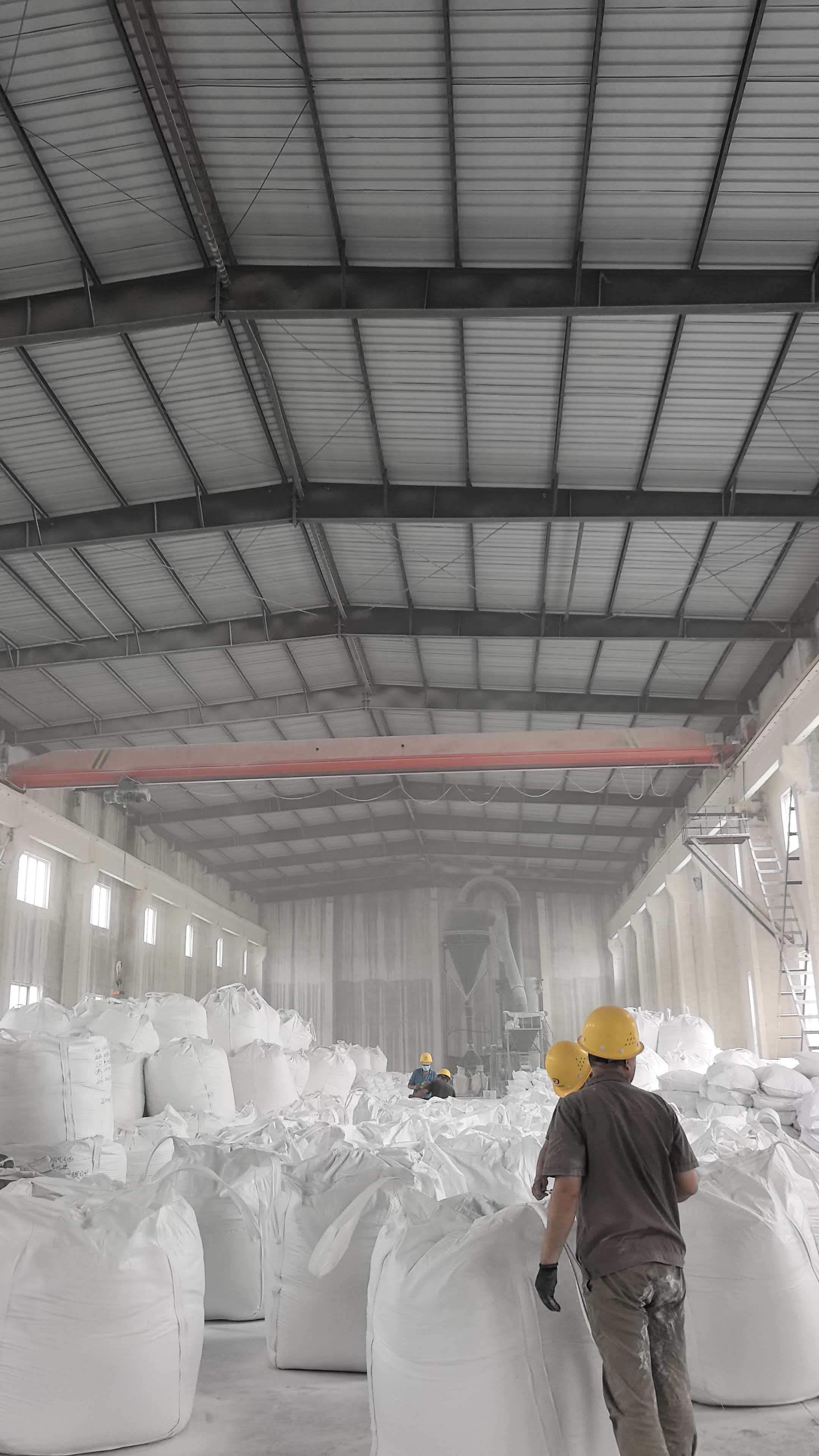
White silica fume is a high-purity silica fume produced under controlled special processing. Its Fe₂O₃ content is typically below 1.5%, with ISO brightness reaching 85% or higher, up to 92%. Standard grey silica fume has Fe₂O₃ content of 3%-6% and brightness of only 40%-60%.
White silica fume is made from low-iron silica stone. The smelting process strictly controls reducing atmosphere and cooling rate. The collected fumes undergo magnetic separation and air classification to remove iron impurities and coarse particles. This makes white silica fume 30%-50% more expensive than grey silica fume, but it is irreplaceable in decorative concrete applications.
Key data: White silica fume typically has SiO₂ content ≥94%, higher than grey silica fume (SiO₂ 85%-92%), with stronger pozzolanic activity. This means at the same dosage, white silica fume provides slightly greater strength improvement than grey silica fume.
Chemical Composition: More Than Just Color
The core difference between white and grey silica fume lies in Fe₂O₃ and carbon content. Iron and carbon are the main causes of grey and dark coloration. Below is a typical chemical composition comparison:
| Chemical Component | White Silica Fume | Grey Silica Fume | Impact |
|---|---|---|---|
| SiO₂ | ≥94% | 85%-92% | Higher pozzolanic activity |
| Fe₂O₃ | <1.5% | 3%-6% | Iron content determines whiteness |
| C (Carbon) | <0.5% | 1%-3% | Carbon affects whiteness and water demand |
| Al₂O₃ | 0.5%-1.5% | 0.5%-1.5% | Similar in both |
| Whiteness (ISO) | 85%-92% | 40%-60% | Determines decorative effect |
Note that carbon content affects not only whiteness but also water demand and air entrainment. Higher unburned carbon in grey silica fume adsorbs superplasticizer molecules, increasing superplasticizer demand by 10%-20% to achieve the same flow. White silica fume, with lower carbon content, adsorbs less superplasticizer and provides a more stable admixture system.
Whiteness and Optical Properties: The Decorative Deciding Factor
In white cement-based materials, silica fume whiteness directly determines the final product whiteness. White cement itself typically has 85%-90% brightness. Adding grey silica fume drops overall brightness by 5-10 points. If the project requires ≥90% brightness (e.g., white UHPC panels, white terrazzo, GRC decorative trim), white silica fume is mandatory.
From an optical perspective, Fe₂O₃ has a strong absorption band in the 0.45-0.65 micron visible light range—exactly the band where human eyes are most sensitive. Even 1% Fe₂O₃ creates a perceptible grey-green tint in a white matrix. This is why iron content in silica fume must be controlled to 0.1% precision in white concrete.
Engineering tip: In white UHPC mix design, white silica fume dosage should be 8%-12% of binder. Too low (<5%) fails to fill micro-pores; too high (>15%) increases water demand and early autogenous shrinkage.
Mechanical Properties: Is White Silica Fume Better?
Mechanically, the difference between white and grey silica fume is much smaller than the color difference. Due to higher SiO₂ content (typically ≥94%), white silica fume has a slightly faster pozzolanic reaction. At the same dosage (8% of binder) and water-binder ratio (0.20), white silica fume UHPC shows 5%-10% higher 28-day compressive strength than the grey group.
This difference comes from two mechanisms:
- Higher pozzolanic activity: More SiO₂ reacts with Ca(OH)₂ to form C-S-H gel, refining pore structure
- Lower water demand: Lower carbon content means smoother particle surfaces, reducing water needs at the same flow
However, if appearance is not required, good quality grey silica fume achieves the same mechanical performance. The 5%-10% mechanical advantage from color difference does not justify the 30%-50% price premium.
Durability: Both Perform Equally
In terms of impermeability, chloride ion penetration resistance, sulfate attack resistance and alkali-aggregate reaction, white and grey silica fume perform essentially the same. Durability depends mainly on the micro-filler effect and pozzolanic reaction, not color.
Test data shows that at 8% dosage, both concrete groups achieve chloride diffusion coefficients (RCM method) of 1-3×10⁻¹² m²/s, classified as "very high impermeability". 28-day water penetration depth is less than 10mm for both. From a durability standpoint, there is no significant difference.
Applications: When Must You Use White Silica Fume?
Applications requiring white silica fume
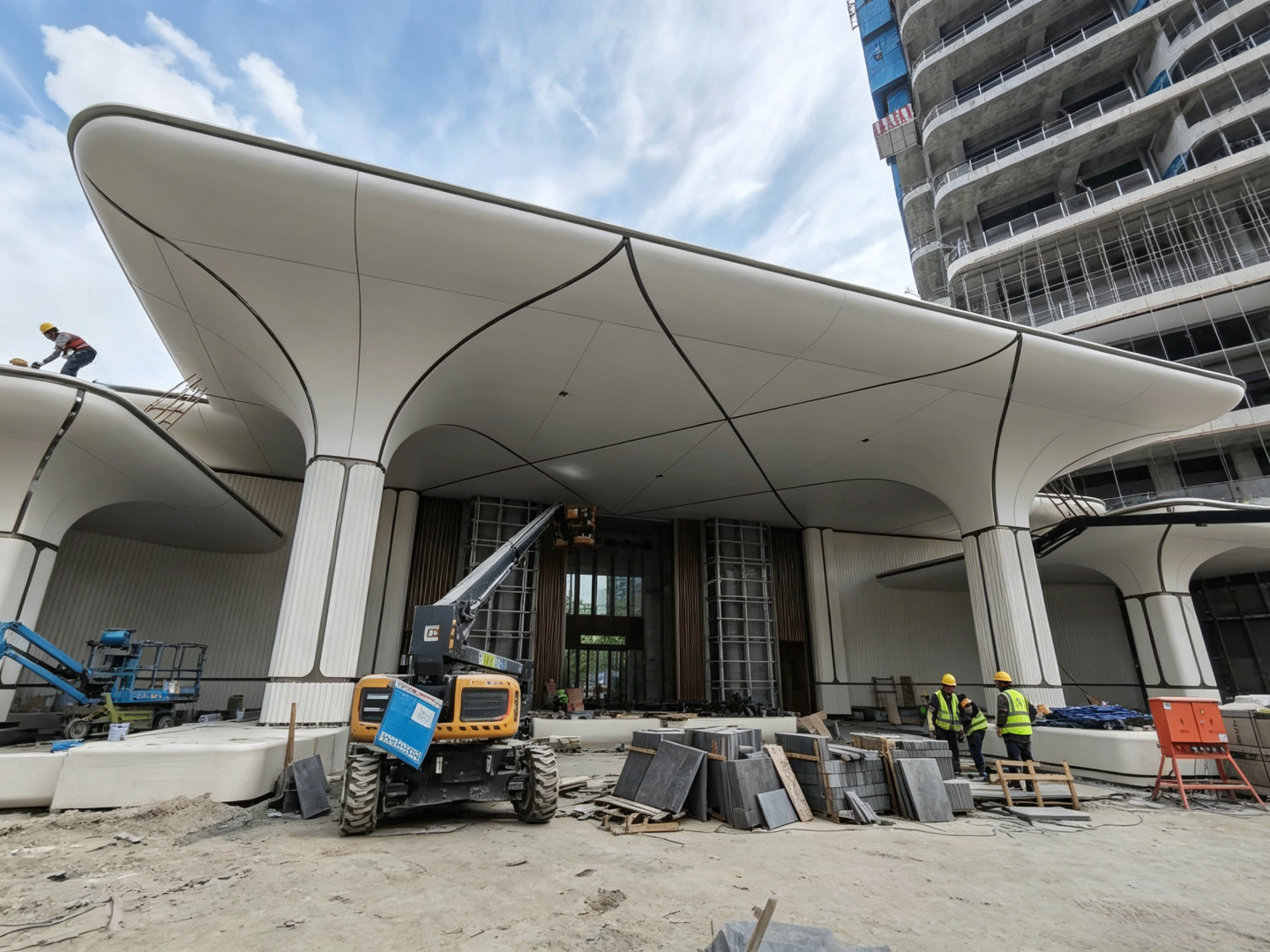
- White UHPC facade panels: Architectural exteriors requiring pure white or light grey finish—grey silica fume causes uneven color
- GRC decorative products: Glass-fiber reinforced concrete precast elements requiring high surface color consistency
- White terrazzo and architectural concrete: Decorative floors and artworks requiring light tone
- Fair-faced concrete finishes: Walls requiring uniform light grey tone
- White grouts and repair mortars: Repairs requiring color match to existing structures
Applications where grey silica fume is sufficient
- Normal high-strength concrete (C80-C120)
- Shotcrete and tunnel linings
- Marine engineering and port facilities
- Refractory materials and ceramics
- Underground structures and hydraulic concrete
Dosage Recommendations and Construction Tips
Recommended white silica fume dosage for different applications:
| Application Type | Recommended Dosage (% of binder) | Water-Binder Ratio |
|---|---|---|
| White UHPC | 8%-12% | 0.16-0.22 |
| GRC precast elements | 5%-8% | 0.30-0.38 |
| Decorative fair-faced concrete | 6%-10% | 0.28-0.35 |
| White repair mortar | 10%-15% | 0.30-0.40 |
Construction notes:
- White silica fume has high specific surface area and water demand. Use with superplasticizer. Dosage may be 5%-10% higher than grey silica fume systems (though lower carbon means less adsorption, optimization is still needed)
- Extend mixing time by 30 seconds to ensure uniform dispersion of ultrafine particles
- Store white silica fume sealed and dry. Moisture causes caking, affecting dispersion and activity
- In GRC products, pre-mix silica fume with dry ingredients for 2 minutes before adding water
Cost-Effectiveness Analysis
White silica fume CIF price is typically 30%-50% higher than grey silica fume. Using 2026 market prices as an example:
- Grey silica fume (SiO₂≥92%): approximately $280-$350/ton
- White silica fume (SiO₂≥94%, brightness≥88%): approximately $420-$530/ton
In practice, the additional cost of white silica fume is not significant. For UHPC facade panels, binder cost is about 15%-20% of total cost, and silica fume is only about 10% of binder. White silica fume costs $150/ton more, but at 80-100kg/m³, that adds only $12-$15 per cubic meter—fully acceptable for UHPC panels costing thousands per cubic meter.
More importantly, if grey silica fume is incorrectly used in decorative concrete and fails color specifications, rework or replacement costs are 10x the material price difference. From a life-cycle cost perspective, white silica fume is the more economical choice for decorative projects.
FAQ
Q1: Can white silica fume fully replace white cement?
No. White silica fume is a mineral admixture; white cement is a binding material. They work best together: white cement provides binding and whiteness base, white silica fume fills micro-pores and enhances strength and durability. White silica fume alone cannot achieve the required whiteness and strength.
Q2: What is the difference between white silica fume and white fly ash?
Although both are white powders, performance differs greatly. White fly ash has SiO₂ content of 50%-60%, specific surface area of 300-500 m²/kg, coarser particles, and much lower pozzolanic activity. Silica fume specific surface area is 50x greater than fly ash, with much stronger micro-filler and pozzolanic effects. In UHPC, fly ash cannot replace silica fume.
Q3: How to verify if purchased white silica fume is truly white?
Three quick tests: ①Check brightness—place powder on white paper; brightness should be above 85%. ②Check loss on ignition—high carbon samples show high LOI and turn black when ignited. ③Simple mechanical test—prepare paste at 8% dosage and measure 7-day compressive strength; quality white silica fume should increase strength by 20% or more.
Q4: What is the shelf life of white silica fume?
Shelf life is 6 months when sealed and dry. White silica fume is highly hygroscopic; moisture causes caking that affects dispersion and activity. Use promptly after opening; reseal any leftovers.
Conclusion
The choice between white and grey silica fume is essentially a trade-off between decorative effect and cost. For structural concrete, shotcrete, marine engineering and other non-visual applications, grey silica fume is sufficient and more cost-effective. But for white UHPC panels, GRC decorative products, white terrazzo and other color-critical projects, white silica fume is irreplaceable.
As a silica fume exporter, we recommend clarifying three questions when selecting materials: ①Does the final product require a light-colored appearance? ②Is white cement being used? ③What color tolerance is acceptable? The answers to these three questions determine whether you should choose white or grey silica fume.
Need white silica fume samples or technical solutions?
We provide free 1-2kg white silica fume samples (SiO₂≥94%, brightness≥88%) and customized mix design technical support for UHPC and GRC.
Get Quote View Product Details