Table of Contents
Inquiries often come with this contrast: two quotations both list around 93% SiO₂ and look similar in composition, yet one pile is a light, dusty loose fines that flies up at a touch, while the other pours as distinct, free-flowing granules. Many buyers compare only SiO₂ and the per-tonne price in the first round, missing the key difference — not chemistry, but physical form: one is undensified (as-collected) silica fume, the other densified silica fume.
Two powders with the same chemistry can behave like two different materials in the mixer, load two very different ways in a container, and demand two different levels of on-site dust control. Using our real photos of a 93% undensified silica fume sample, this article explains the undensified form in full: how it looks under the microscope and in the pile, how to read the 93% grade datasheet, where its engineering advantages and costs lie, which systems suit it, and which indicators to watch in procurement and feeding.
First, the Basics: What Undensified Silica Fume Is, and How It Differs from Densified
Silica fume (also called microsilica or condensed silica fume) is an ultra-fine powder recovered from the off-gas of silicon metal and ferrosilicon furnaces. Its primary particles are only 0.1–0.15 μm across, about one hundredth the size of a cement grain, with an extremely high specific surface area — the physical basis for both its micro-filler role and its pozzolanic reaction.
- Undensified (as-collected): the fines are collected directly from the furnace dust and bagged without compaction or granulation; particles keep their loose cluster structure.
- Densified silica fume: the ultra-fine powder is compacted and granulated into small pellets to raise bulk density, improve flow, and cut dust in transport and feeding.
- Micronized / milled fume: the native agglomerates are deliberately ground apart, paying an extra processing cost for a finer, more uniform powder.
A common misunderstanding: densifying or milling does not change the SiO₂ content, the chemistry, or the fume's inherent pozzolanic activity. What it changes is the form in which these ultra-fine particles enter the paste — loose clusters, or pellets that must be broken back down. Choosing a form is therefore a logistics, dispersion and process-match decision, not a verdict on powder quality. Equating “undensified” with “low-grade” is one of the most common selection mistakes.
Reading the Undensified Powder from These Three Real Photos
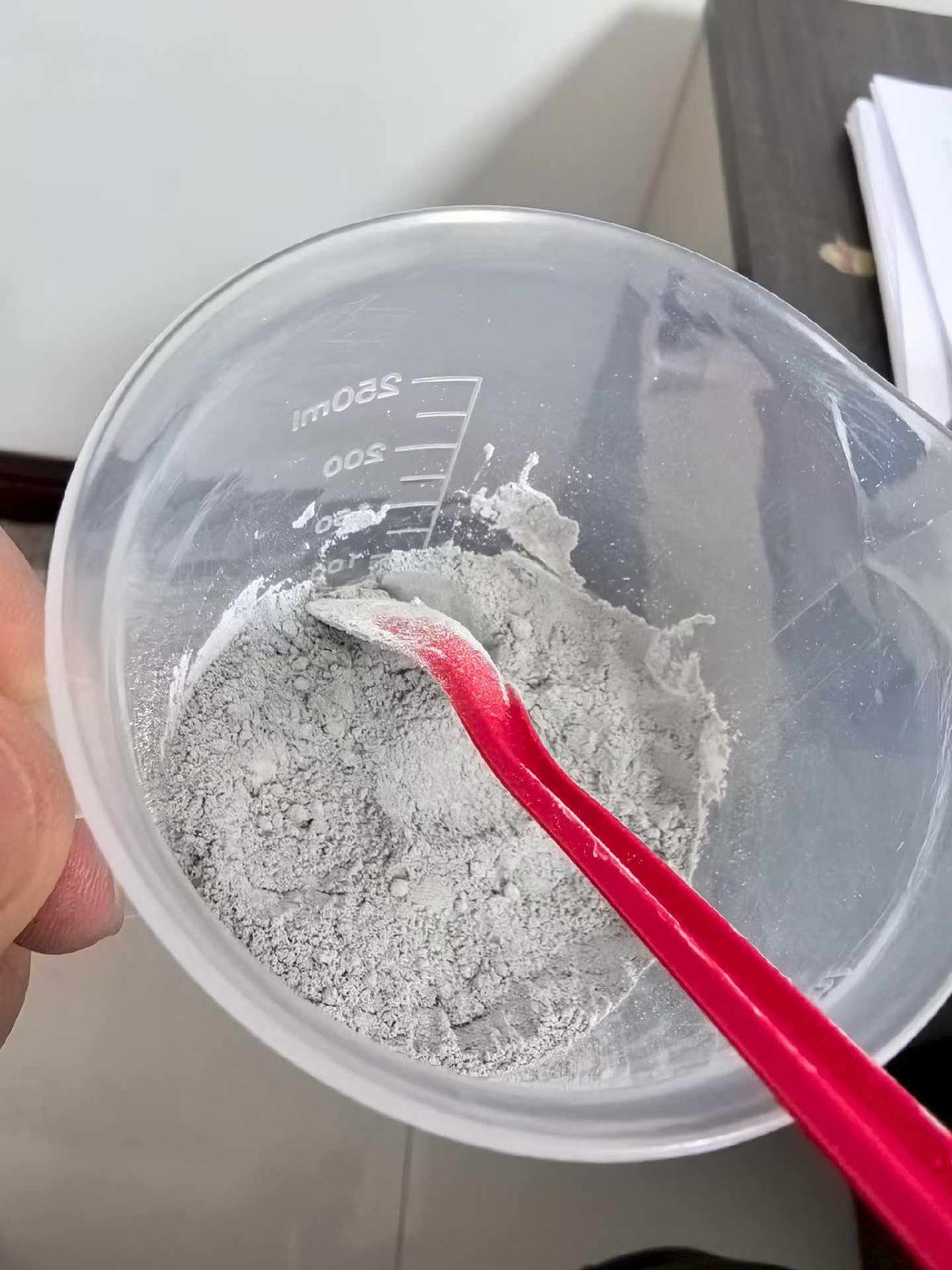
Light grey fines in a transparent measuring cup with a red mixing spoon; loose powder and small agglomerates are visible.
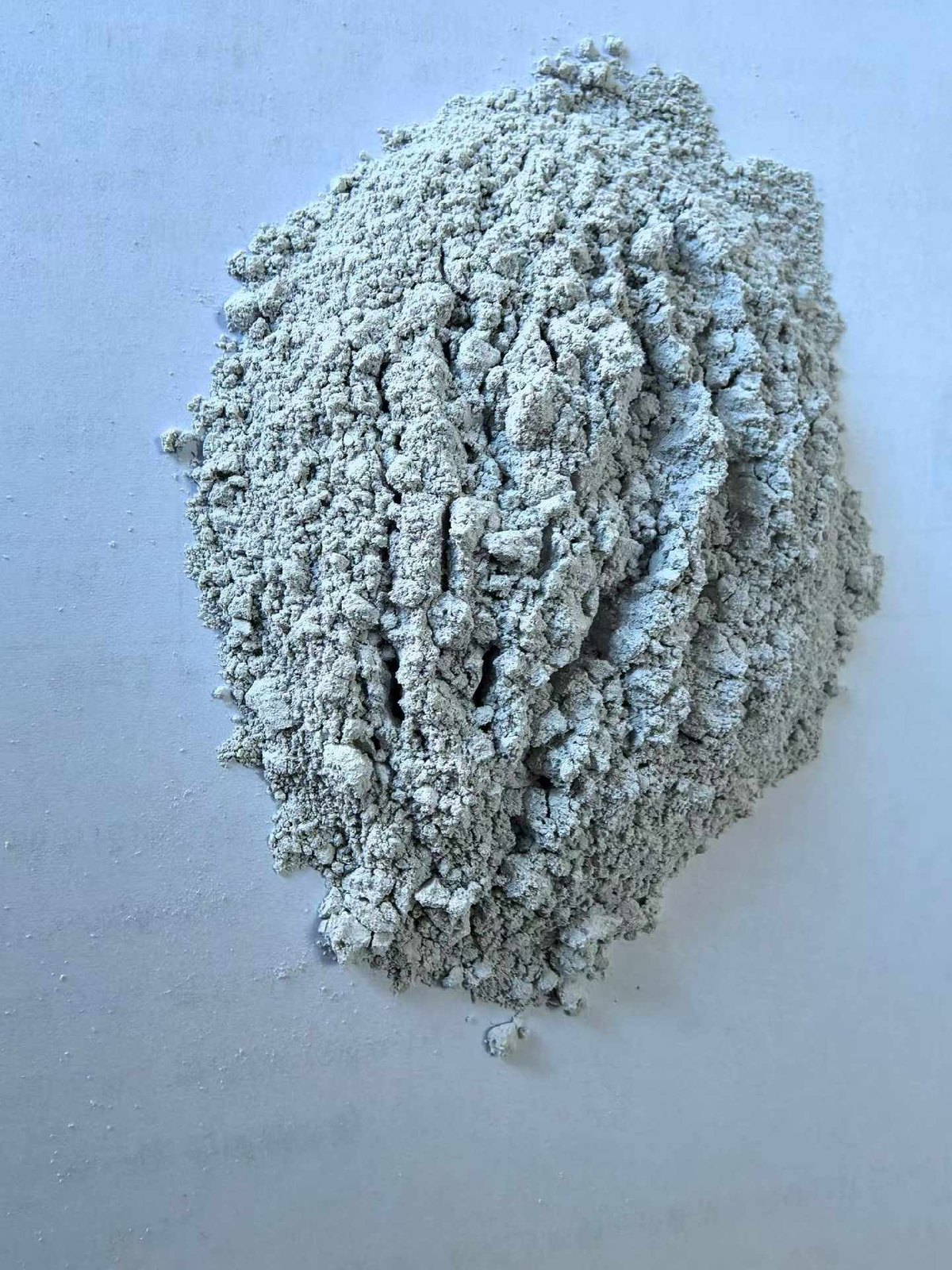
Start with the sample in the cup. The powder is light grey; the spoon carries loose fines, and small agglomerates sit at the bottom. Undensified fume feels light, airy and fine, with a smooth, slippery touch between the fingers — typical of a submicron powder. Those small lumps are not hardened cakes; they are fines that naturally agglomerated during stacking.
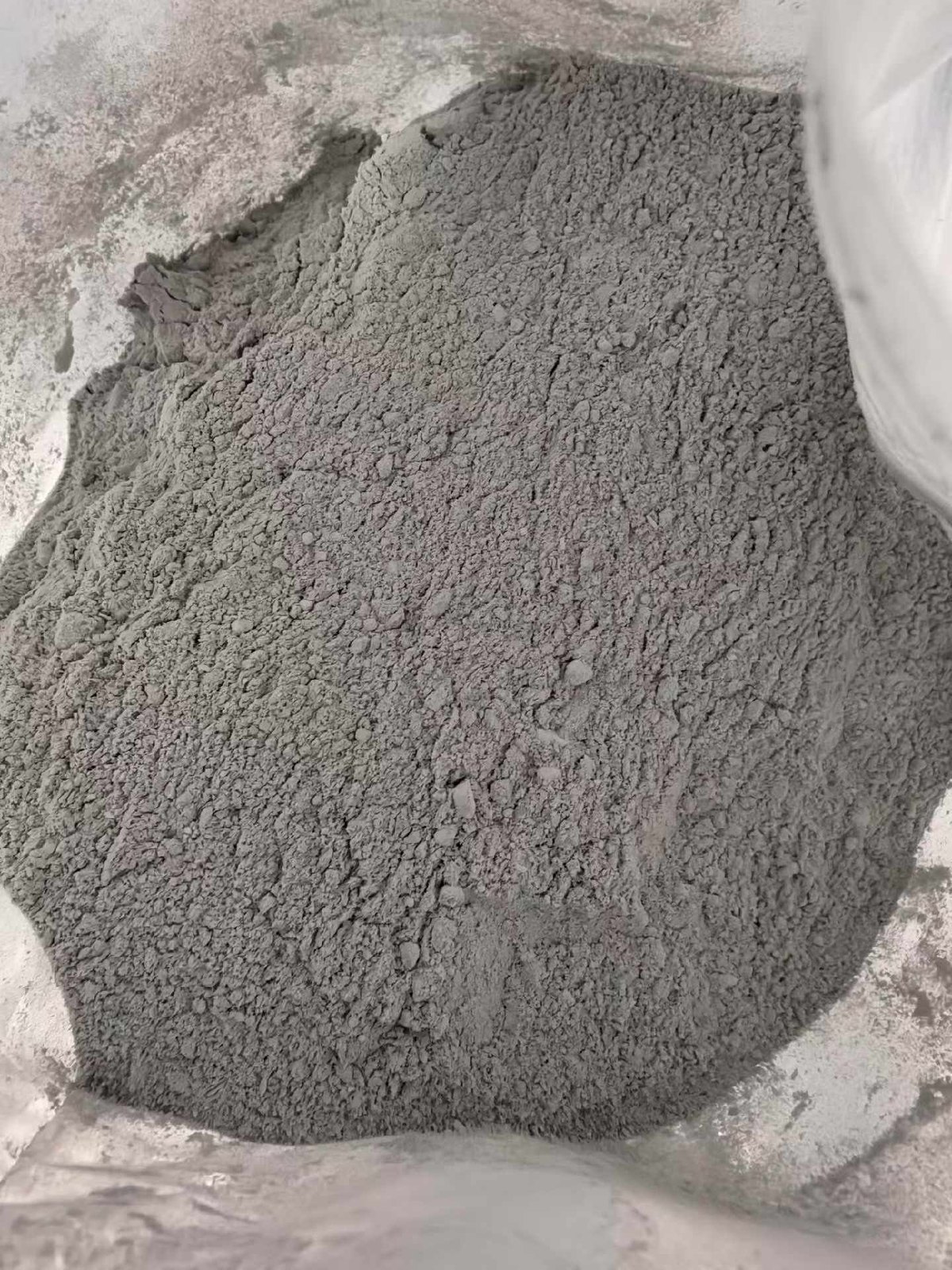
A dark grey powder pile inside a bag, with surface cracks and agglomerates of varying size.
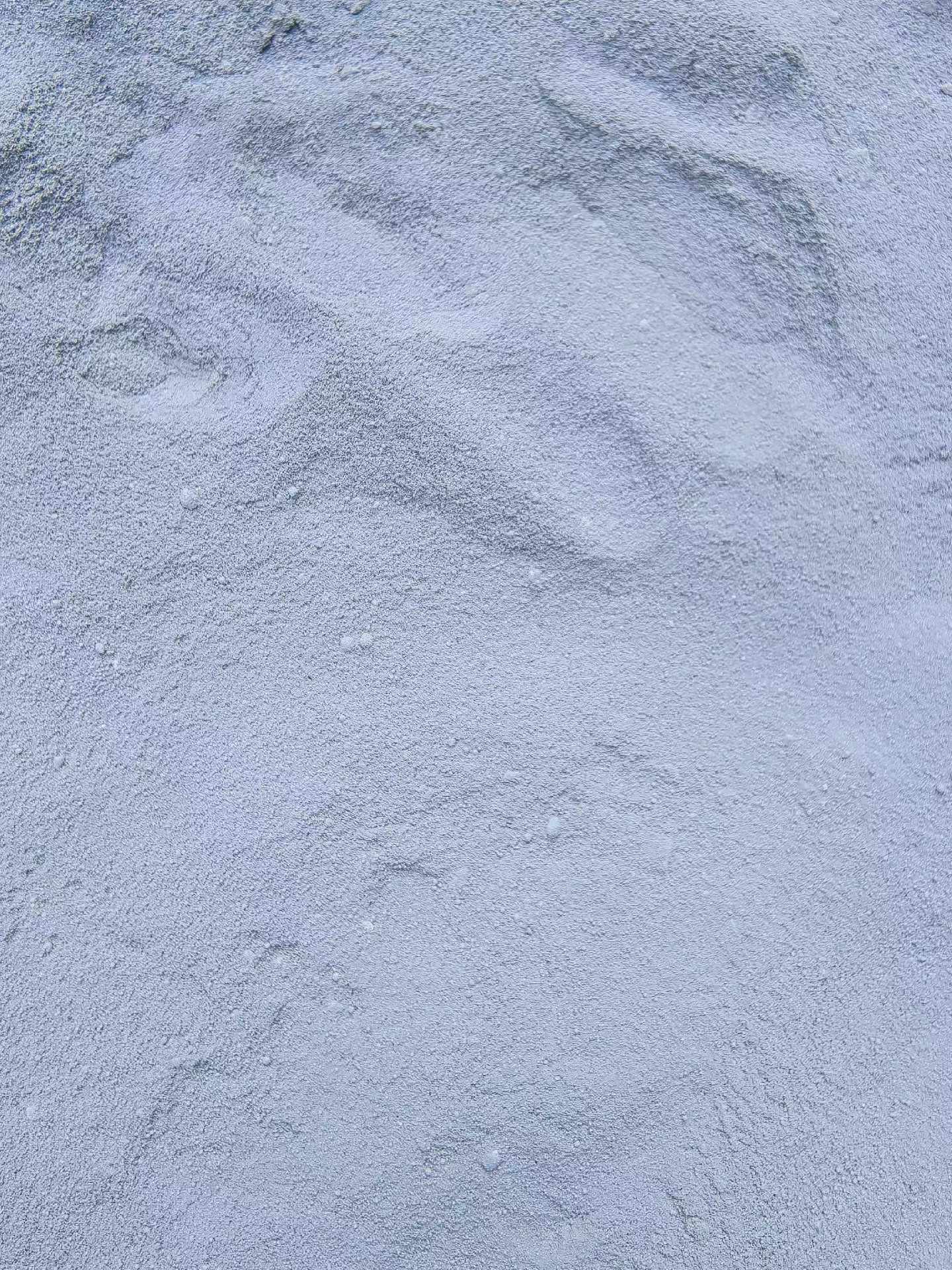
Then look at the dark grey pile in the bag. The surface cracks and lumps of varying size are clusters formed under self-weight and long-term stacking. This differs fundamentally from cement set or hydration hardening: silica fume clusters are held together by inter-particle van der Waals forces and collection/cooling conditions, with no hydration reaction, and should reopen under water and mixing shear. Precisely because it was never compacted, these clusters are relatively loose inside — which is why undensified fume often disperses faster and more directly in the paste.
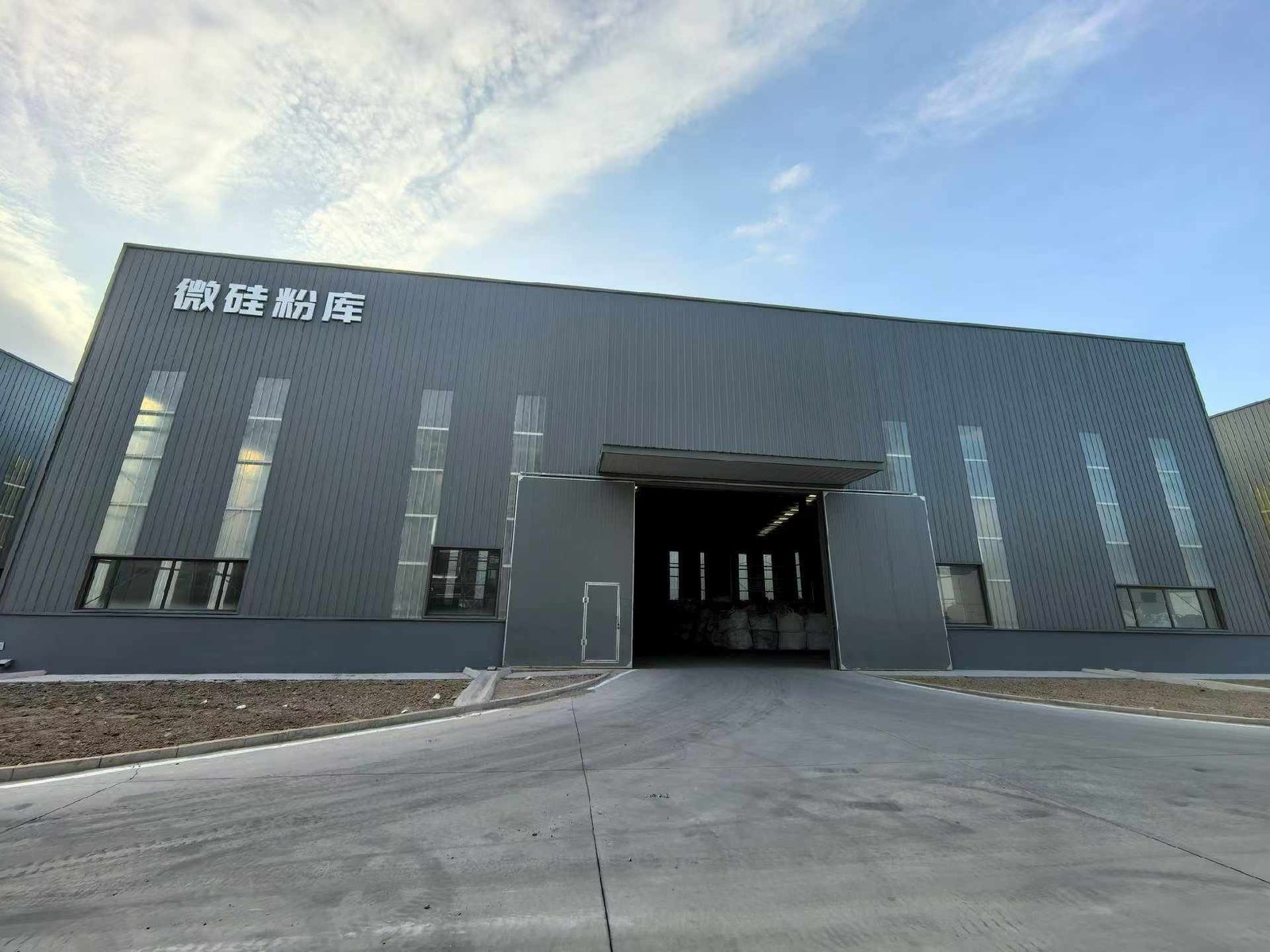
Exterior of the microsilica warehouse; bulk bags are visible inside.
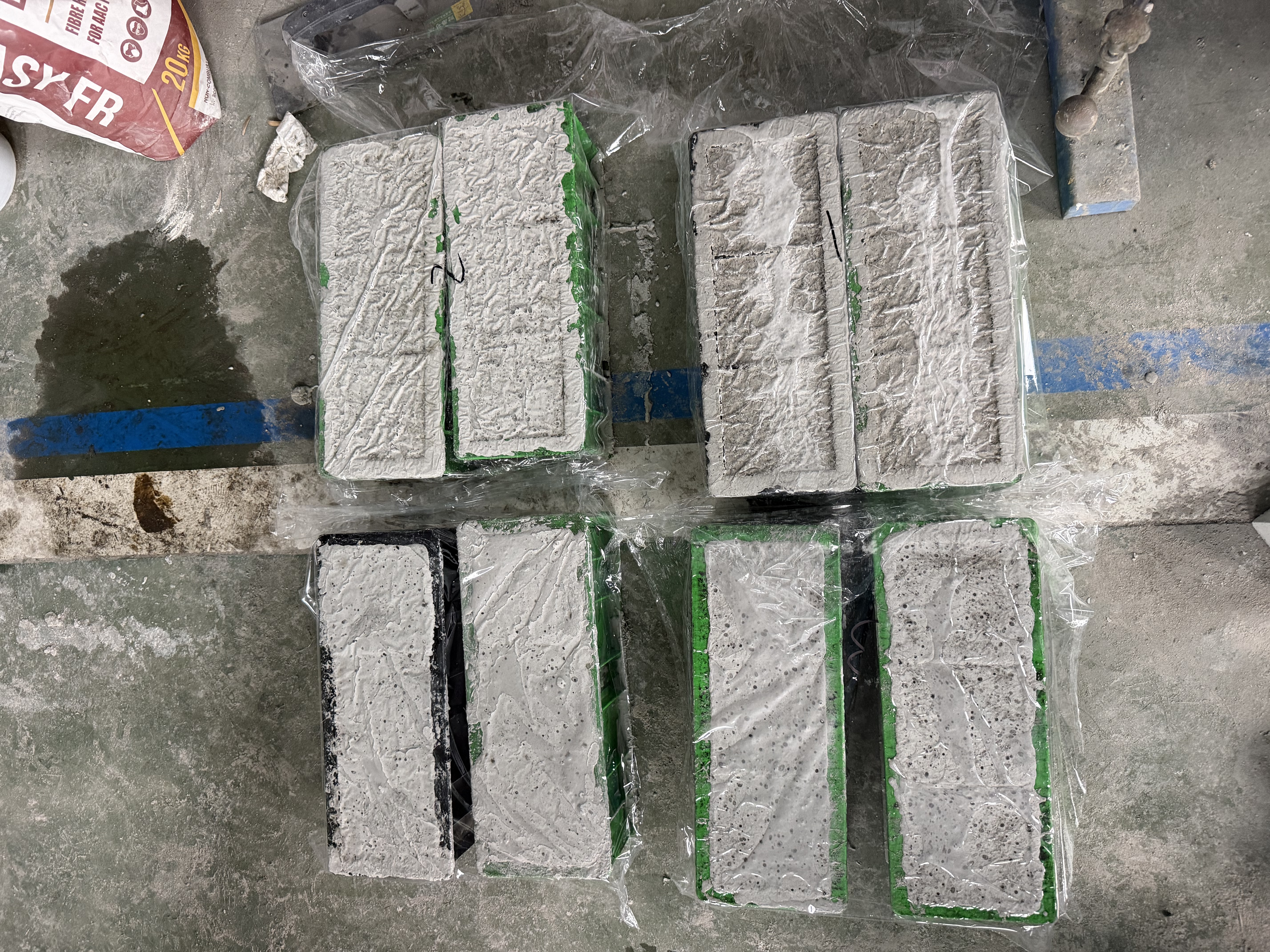
Photo 3 shows the warehouse exterior. Undensified fume has a low bulk density and takes up more volume, so it places higher demands on storage space and stacking method than densified fume; this is expanded further in the logistics and loading section below.
Technical Profile of the 93% Grade: The Datasheet Numbers to Read Together
This sample sits in the high-activity band of grey silica fume, around 93% SiO₂, within our grey fume 85%–95% grade range. Note first: the figures below are typical bands for the grade; for each individual lot, the factory datasheet and on-receipt retest remain the reference.
BET Specific Surface Area
Typically in the 15–22 m²/g band. BET sets the contact area for both micro-filling and pozzolanic reaction: too low and filling and reaction duties are weak; too high often means water demand rises with it, so area should not be chased in isolation.
Loss on Ignition (LOI) and Free Carbon
The economy grey grade generally keeps LOI at ≤3.0%. High carbon adsorbs superplasticizer molecules, spends part of the dispersant budget, and leaves dark mottling on pale finishes; in mixes sensitive to appearance and plasticizer dose, LOI should be tracked separately.
Moisture Content
Silica fume is hygroscopic, normally controlled at ≤1.0%. Damp storage directly shifts the effective water-to-binder ratio; check moisture on receipt, not only at the factory gate.
45 μm Sieve Residue and 28-Day Activity Index
Sieve residue reflects how many hard agglomerates remain; the 28-day activity index is the closest paper measure to a long-term strength promise. Note that the index is measured after the clusters are fully dispersed — if the test itself did not open them, paper values and real in-mix performance can diverge.
In concrete, silica fume acts in two ways: ultra-fine particles fill the micro-pores between cement grains and refine the pore structure, cutting water absorption and chloride penetration; at the same time, the amorphous SiO₂ reacts with the Ca(OH)₂ released by cement hydration in a pozzolanic reaction, forming extra C-S-H gel and strengthening the interfacial transition zone. The 93% figure is only the entry ticket; what actually decides strength, workability and durability is how the above numbers work together. For a line-by-line datasheet reading, see our previous article on silica fume specifications.
The Engineering Ledger of Undensified Fume: Count Advantages and Costs Together
The undensified form is neither “better” nor “worse”; its advantages and costs stem from the same physical fact: a loose powder with low bulk density.
Its advantage sits mainly on the dispersion side. Because the clusters were never compacted and their internal structure is loose, they open more readily under shear once water is added, and primary particles disperse into the paste faster. In systems with an adequate mixing cycle and enough shear, the reactive surface is exposed more directly, without the densified-fume risk of pellets surviving as unbroken nuclei. For mix development, trial batches and dispersion-sensitive systems, this directness has real value.
Its cost sits mainly on the logistics and handling side. Undensified fume usually runs only 200–350 kg/m³ in bulk density, while densified fume reaches 600–800 kg/m³. Lower bulk density means fewer tonnes per unit volume: more storage footprint, limited tonnes per container, and a higher share of freight per tonne. The powder is also light and dusty, raising dust-control requirements in feeding, transfer and automatic batching; its flow is poorer, it does not pour as freely as densified fume, and it adapts less well to screw or belt feeders. Combined with its hygroscopicity, undensified stock needs stricter moisture-protected storage in damp environments.
By contrast, densified fume handles, bags, loads and meters markedly better, with less dust and easier automatic feeding; its cost is that the compacted pellets need a full mixing cycle to break back down, and in a short, low-shear mixer some may remain as small nuclei in the batch. Once fully dispersed, the two forms are equivalent in final concrete performance; the difference lies in how the process behaves.
Where to Choose Undensified, and Where Densified Fits Better
Cases Where Undensified Fume Is the Better Fit
- Refractory castables, precast or dry-mix premix systems, where the mixing cycle is relatively long and dispersion state matters;
- Laboratory mix development and small trial batches, where you want the powder to disperse on contact with water so the real reaction is easy to observe;
- Production lines equipped with forced or high-shear mixers that allow enough time to break up clusters after feeding;
- Settings where there is concern that pellets cannot fully break down in a short mixing cycle.
Cases Where Densified Fume Is the Better Fit
- Ready-mix batching plants with automatic metering, screw or belt feeding, where free flow, stable feed and low on-site dust are required;
- Long-distance ocean shipping with multiple transfers, where high bulk density, tonnes per container and freight economy matter more;
- Sites with strict occupational health and dust-control requirements, where feeding-point dust must be minimized.
For UHPC and high-strength matrices, fume dosage typically rises to 15%–25% of binder, because the matrix relies on dense packing and very low permeability. Here the two forms are equivalent once fully dispersed; the deciding factor is whether equipment shear and mixing cycle are sufficient, not the form label itself. Dosage in conventional concrete and grout is generally 5%–10% of cementitious material, on an equivalent cement replacement; in refractory castables the zirconia-bearing white grade runs about 4%–8% of castable weight. The exact dosage should be set by trial batch.
A Checklist to Go Through Before Procurement and Use
- Define the form before comparing prices: specify undensified, densified or micronized in the RFQ and contract, so two quotes are not compared on different forms.
- Plan loading and storage by bulk density: do not estimate container and warehouse volume by weight alone for undensified stock; account for bulk density.
- Request the lot datasheet: SiO₂, LOI/free carbon, BET, moisture, 45 μm sieve residue and 28-day activity index, read against the ASTM C1240 reference.
- Confirm the activity-index test premise: ask whether clusters were fully dispersed during testing, to avoid a gap between paper values and mix behavior.
- Feed order and mixing cycle: blend with dry materials first per the process, and allow enough shear to open clusters; watch for residual nuclei in short-cycle, low-shear equipment.
- Dust protection: enclosed feeding and dust extraction, with proper respiratory protection for operators.
- On-receipt retest and retained sample: check moisture and appearance and keep a sealed sample for disputes; before a container load, run a small trial batch with your own cement, sand, water temperature and admixture.
On a quotation, silica fume often looks like a commoditized filler: price per tonne, SiO₂ percentage, two lines. Once it reaches the mixer it is an engineering material, and what decides performance is often not the number a buyer looks at first. For 93% undensified fume: read its physical form and dispersion path first, match grade and form to your equipment, transport and system requirements, then let a trial batch confirm the datasheet promise — a far safer route than simply picking the cheapest pile.
If you are comparing silica fume grades for a high-strength concrete, UHPC element or refractory castable, send us your mix constraints and target strength; we can advise on grade, form and dosage range, and supply a 1–2 kg sample for trial testing.
Compare Grades Against Your Mix
Tell us your concrete class, exposure environment, colour target and 28-day requirement. We will suggest the grade, physical form and dosage range, and supply a 1–2 kg trial sample.
Request Grade Recommendation View Silica Fume Products